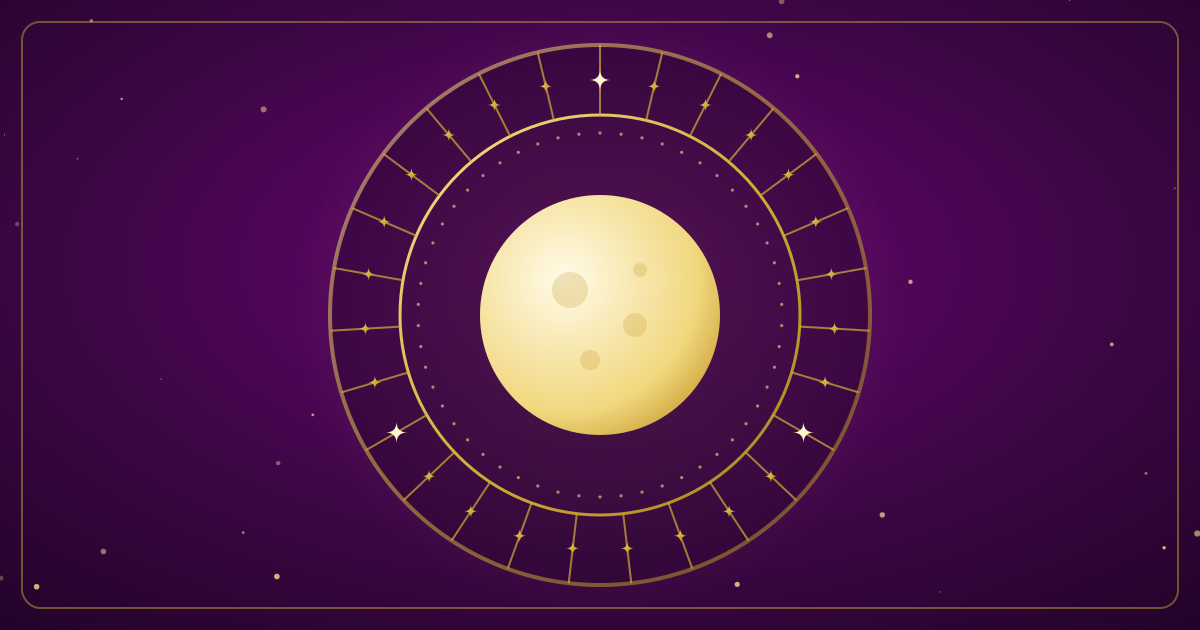
Long before the twelve zodiac signs became popular, Indian astronomers tracked the Moon against a ring of 27 star groups called nakshatras, or lunar mansions. The Moon takes about 27⅓ days to go round the sky, so it spends roughly one day in each. Your janma nakshatra, or birth star, is the one the Moon occupied when you were born, and in Vedic astrology it is often more personal than your Sun sign.
This guide lists all 27 with the details astrologers use most: their span in the zodiac, ruling planet, presiding deity, symbol and gana (temperament), with a short note on the nature traditionally linked with each.
How the nakshatras are measured
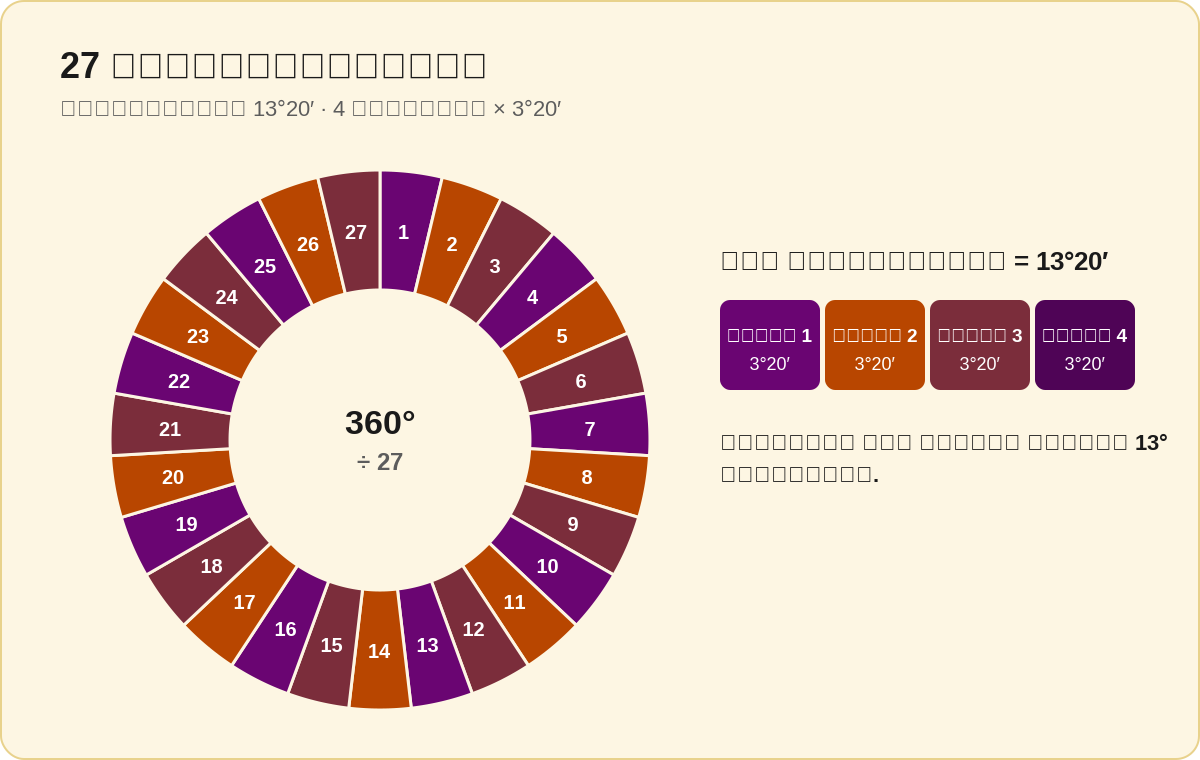
The zodiac is a circle of 360°. Divided by 27, each nakshatra covers 13°20′, and each is split into four quarters called padas of 3°20′. That gives 108 padas in all, which is why 108 is such an important number in Indian tradition. Nine padas make up one zodiac sign (9 × 3°20′ = 30°), so some nakshatras sit entirely in one sign and others straddle two.
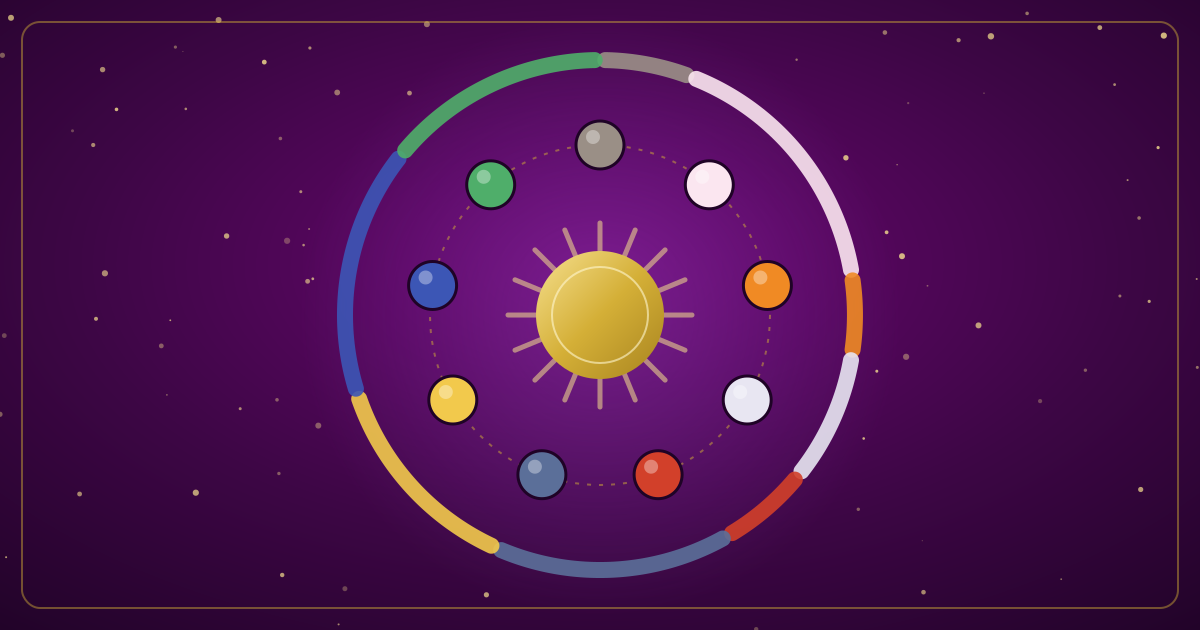
Each nakshatra has a ruling planet. The nine planets of the Vimshottari dasha system rule them in a fixed order that repeats three times: Ketu, Venus, Sun, Moon, Mars, Rahu, Jupiter, Saturn and Mercury. Each also belongs to one of three ganas: Deva (gentle, idealistic), Manushya (human, balanced) or Rakshasa (intense, independent). There are nine of each.
Aries to Cancer: Ashwini to Ashlesha
1. Ashwini (0°–13°20′ Aries). Ruler Ketu; deity the Ashwini Kumaras, the divine twin physicians; symbol a horse's head; Deva gana. Quick, energetic and fond of fresh starts, it is linked with healing, speed and first aid.
2. Bharani (13°20′–26°40′ Aries). Ruler Venus; deity Yama, lord of dharma and death; symbol the yoni; Manushya gana. A star of strong will and endurance, associated with responsibility, creativity and carrying burdens to completion.
3. Krittika (26°40′ Aries–10° Taurus). Ruler the Sun; deity Agni, fire; symbol a blade or flame; Rakshasa gana. Sharp, direct and purifying: people of this star are often frank, protective and good at cutting through confusion.
4. Rohini (10°–23°20′ Taurus). Ruler the Moon; deity Prajapati (Brahma), the creator; symbol a cart or chariot; Manushya gana. Said to be the Moon's favourite star, it is connected with beauty, growth, comfort, art and fertility.
5. Mrigashira (23°20′ Taurus–6°40′ Gemini). Ruler Mars; deity Soma; symbol a deer's head; Deva gana. Curious and searching, like a deer on alert, it is linked with travel, research and a gentle restlessness.
6. Ardra (6°40′–20° Gemini). Ruler Rahu; deity Rudra, the storm form of Shiva; symbol a teardrop or diamond; Manushya gana. A star of storms that clear the air, it brings sharp intellect, emotional intensity and the ability to rebuild after upheaval.
7. Punarvasu (20° Gemini–3°20′ Cancer). Ruler Jupiter; deity Aditi, mother of the gods; symbol a bow and quiver; Deva gana. Its name means 'return of the light'; it is associated with renewal, optimism, generosity and coming home.
8. Pushya (3°20′–16°40′ Cancer). Ruler Saturn; deity Brihaspati, teacher of the gods; symbol a cow's udder or a flower; Deva gana. Widely regarded as one of the most auspicious stars, it is linked with nourishment, care, learning and steady prosperity.
9. Ashlesha (16°40′–30° Cancer). Ruler Mercury; deity the Nagas, serpent beings; symbol a coiled serpent; Rakshasa gana. Perceptive, persuasive and deep, it is connected with insight, hidden knowledge and healing through what is usually feared.
Leo to Scorpio: Magha to Jyeshtha
10. Magha (0°–13°20′ Leo). Ruler Ketu; deity the Pitrs, the ancestors; symbol a royal throne; Rakshasa gana. Dignified and conscious of lineage, it is linked with authority, tradition and respect for elders.
11. Purva Phalguni (13°20′–26°40′ Leo). Ruler Venus; deity Bhaga, giver of fortune and enjoyment; symbol the front legs of a bed or a hammock; Manushya gana. A star of rest, pleasure, romance and the arts.
12. Uttara Phalguni (26°40′ Leo–10° Virgo). Ruler the Sun; deity Aryaman, god of contracts and friendship; symbol the back legs of a bed; Manushya gana. Reliable and helpful, it is connected with partnership, patronage and keeping one's word.
13. Hasta (10°–23°20′ Virgo). Ruler the Moon; deity Savitr, the Sun as inspirer; symbol an open hand; Deva gana. Skilful with the hands and quick-witted, it is linked with craft, healing touch, humour and practical intelligence.
14. Chitra (23°20′ Virgo–6°40′ Libra). Ruler Mars; deity Vishvakarma (Tvashtar), the celestial architect; symbol a bright jewel; Rakshasa gana. A star of design and making things beautiful, associated with architecture, fashion and a strong eye for detail.
15. Swati (6°40′–20° Libra). Ruler Rahu; deity Vayu, the wind; symbol a young shoot bending in the breeze; Deva gana. Independent and adaptable, it is linked with trade, travel, diplomacy and freedom of movement.
16. Vishakha (20° Libra–3°20′ Scorpio). Ruler Jupiter; deities Indra and Agni together; symbol a triumphal arch or potter's wheel; Rakshasa gana. Goal-driven and determined, it is the star of single-minded effort that eventually wins.
17. Anuradha (3°20′–16°40′ Scorpio). Ruler Saturn; deity Mitra, god of friendship; symbol a lotus or a triumphal archway; Deva gana. Loyal and cooperative, it is connected with lasting friendships, organisation and devotion.
18. Jyeshtha (16°40′–30° Scorpio). Ruler Mercury; deity Indra, king of the gods; symbol a circular amulet or umbrella; Rakshasa gana. The 'eldest' star, linked with seniority, protection of others, responsibility and courage under pressure.
Sagittarius to Pisces: Mula to Revati
19. Mula (0°–13°20′ Sagittarius). Ruler Ketu; deity Nirriti, goddess of dissolution; symbol a bunch of roots; Rakshasa gana. Its name means 'root': it is linked with getting to the bottom of things, research, philosophy and starting over from the foundations.
20. Purva Ashadha (13°20′–26°40′ Sagittarius). Ruler Venus; deity Apas, the waters; symbol a fan or winnowing basket; Manushya gana. Confident and persuasive, it is the 'invincible' star, associated with conviction, renewal and inspiring others.
21. Uttara Ashadha (26°40′ Sagittarius–10° Capricorn). Ruler the Sun; deities the Vishvedevas, the universal gods; symbol an elephant's tusk; Manushya gana. Associated with lasting victory, integrity and leadership that earns respect over time.
22. Shravana (10°–23°20′ Capricorn). Ruler the Moon; deity Vishnu; symbol an ear or three footprints; Deva gana. The star of listening, it is linked with learning, teaching, counselling and preserving knowledge.
23. Dhanishta (23°20′ Capricorn–6°40′ Aquarius). Ruler Mars; deities the eight Vasus; symbol a drum; Rakshasa gana. Rhythmic and resourceful, it is connected with music, wealth, teamwork and generosity.
24. Shatabhisha (6°40′–20° Aquarius). Ruler Rahu; deity Varuna, lord of the cosmic waters; symbol an empty circle; Rakshasa gana. Its name means 'a hundred physicians': it is linked with healing, science, solitude and seeing through secrets.
25. Purva Bhadrapada (20° Aquarius–3°20′ Pisces). Ruler Jupiter; deity Aja Ekapada, the one-footed goat, a form of Rudra; symbol the front legs of a funeral cot or a sword; Manushya gana. Intense and idealistic, it is connected with transformation and strong convictions.
26. Uttara Bhadrapada (3°20′–16°40′ Pisces). Ruler Saturn; deity Ahir Budhnya, serpent of the deep; symbol the back legs of a funeral cot or twins; Manushya gana. Calm, wise and patient, it is associated with depth, self-control and quiet strength.
27. Revati (16°40′–30° Pisces). Ruler Mercury; deity Pushan, the nourisher and protector of travellers; symbol a fish or a drum; Deva gana. The last star of the cycle, it is linked with kindness, safe journeys, completion and care for the vulnerable.
The three ganas at a glance
Deva gana (gentle, idealistic): Ashwini, Mrigashira, Punarvasu, Pushya, Hasta, Swati, Anuradha, Shravana and Revati. Manushya gana (human, balanced): Bharani, Rohini, Ardra, Purva Phalguni, Uttara Phalguni, Purva Ashadha, Uttara Ashadha, Purva Bhadrapada and Uttara Bhadrapada. Rakshasa gana (intense, independent): Krittika, Ashlesha, Magha, Chitra, Vishakha, Jyeshtha, Mula, Dhanishta and Shatabhisha.
Rakshasa does not mean a bad person. In this context it describes a strong-willed, self-reliant temperament that does not easily bend to others, and many capable leaders and professionals were born under these stars. The gana matters mostly in matching, where it is compared as one of the eight kootas.
The same planet, three different stars
Because the nine rulers repeat three times, every planet rules three nakshatras spread around the zodiac, for example Ketu rules Ashwini, Magha and Mula, the first star of each fire sign. These three share a family resemblance: a person born in any of them begins life in the same Mahadasha, and the stars echo one another in theme. This is also why the ruling planet of your birth star, and its strength in your chart, is one of the first things an astrologer checks.
How your nakshatra is used
Naming: each pada has a traditional starting syllable, and many families choose a baby's name beginning with the syllable of the birth-star pada. Dasha: the ruling planet of your birth star decides which Mahadasha you were born in, and how far the Moon had moved through the nakshatra sets how much of it remained. This is the starting point of the whole Vimshottari dasha timeline.
Matching: in Kundli Milan, four of the eight kootas (Tara, Yoni, Gana and Nadi) come directly from the two birth stars, which is why matchmaking starts with the nakshatras of both partners. Muhurta: the nakshatra of the day is used to pick good times for weddings, travel, house-warming and starting new work; Pushya, Rohini, the three Uttaras and Revati are traditionally among the favoured ones.
The descriptions above are the classical associations, not a full reading. The rest of the chart, the ascendant, the house the Moon falls in and the planets that aspect it, shapes how a nakshatra actually shows up in a person.
Finding your nakshatra
Because the Moon moves about 13° a day, it can change nakshatra on the day you were born, so you need your date, time and place of birth. Our free Nakshatra Finder shows your birth star, its pada and ruling planet in seconds. The Nakshatra Report goes further, explaining what your birth star and pada mean for your nature, relationships and work.